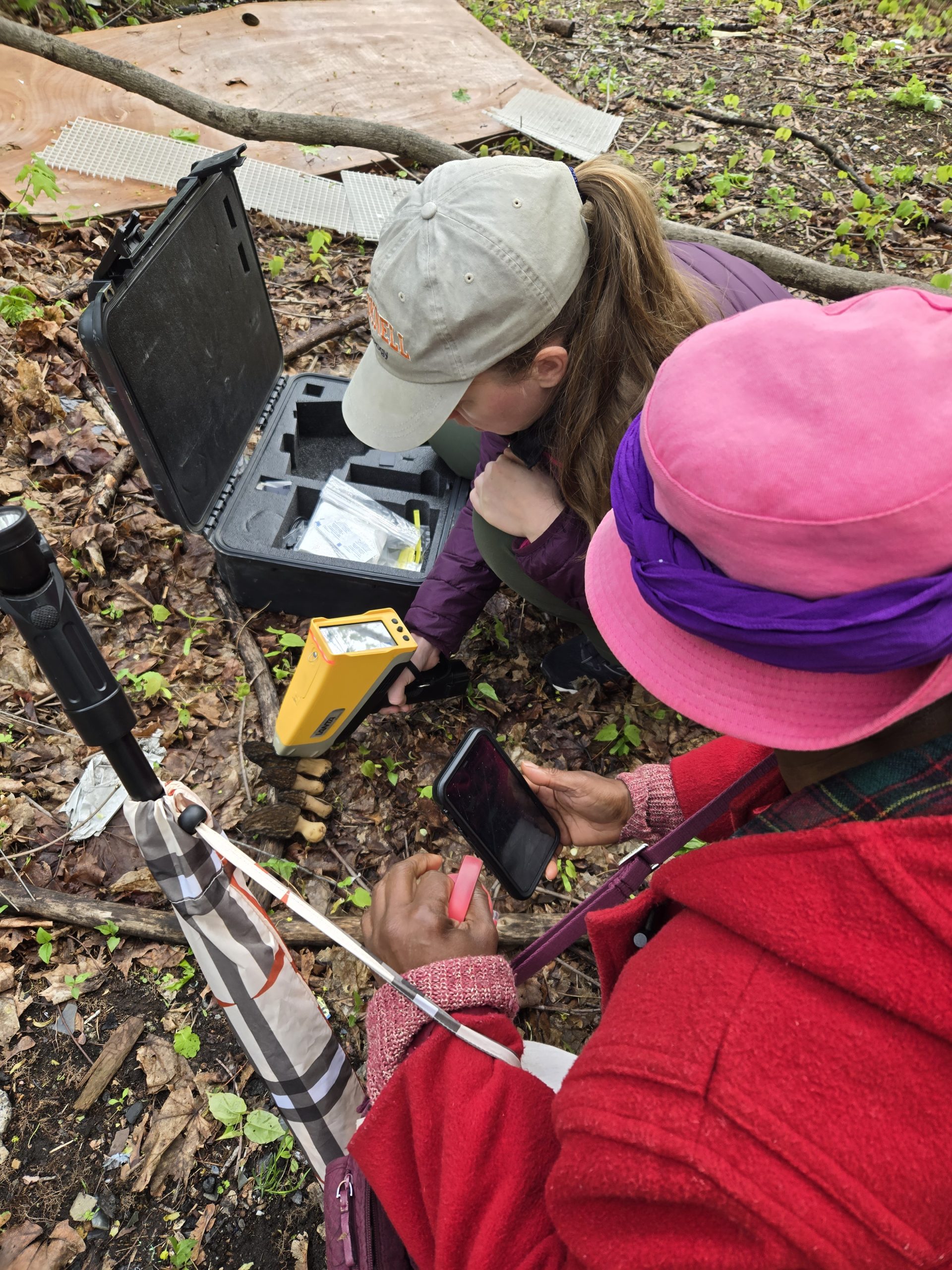
The Pearl Street lot, a city-owned property on South Pearl Street in Shamokin’s 5th Ward, has sat unused for decades. Once the site of a railroad repair yard and then lumber operation tied to Shamokin’s industrial peak, the lot today is overgrown, littered, and contaminated. A collaboration between the Place Studies Program and Foraging Friends resulted in an initial site assessment including a review of historical archives to understand prior use as well as soil testing using an XRF machine (shown in photo above). The site supports a dense tree canopy and active bird community, despite pockets of soil contamination from its industrial history including elevated readings for lead, arsenic, and zinc. (Above photo: Bucknell student and Michele Stansberry of Foraging Friends checking soil contaminants using an XRF machine.)
This project showed me that student research isn’t just collecting data; where the change really happens is turning that data into something a […] community could understand and act on.
–Cristian Cruz, ‘26.
The project also engaged the public through canvassing and surveying to understand community visions for how the lot can become a neighborhood asset, including strong support for sustainability-focused programming including environmental and foraging education. A final report was presented to City Council, and resulted in the City agreeing to participate in a Phase 1 brownfield site assessment through SEDA-COG’s EPA Brownfield Coalitional Assessment Grant, a first step in transitioning this brownfield into a safe community asset.
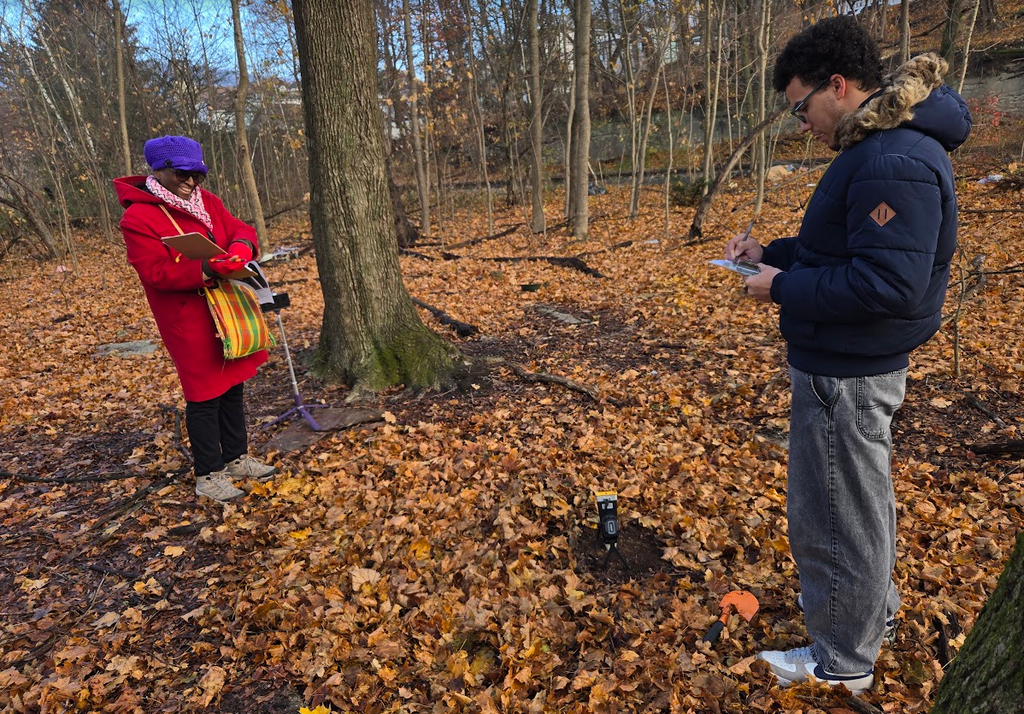
“Talking to residents door to door, especially hearing about kids not having a safe place to play encouraged me to do as much as I could in my short time. It also solidified wanting to work in public infrastructure, where success means actually helping people, and seeing a difference being made.”
–Cristian Cruz, ‘26.