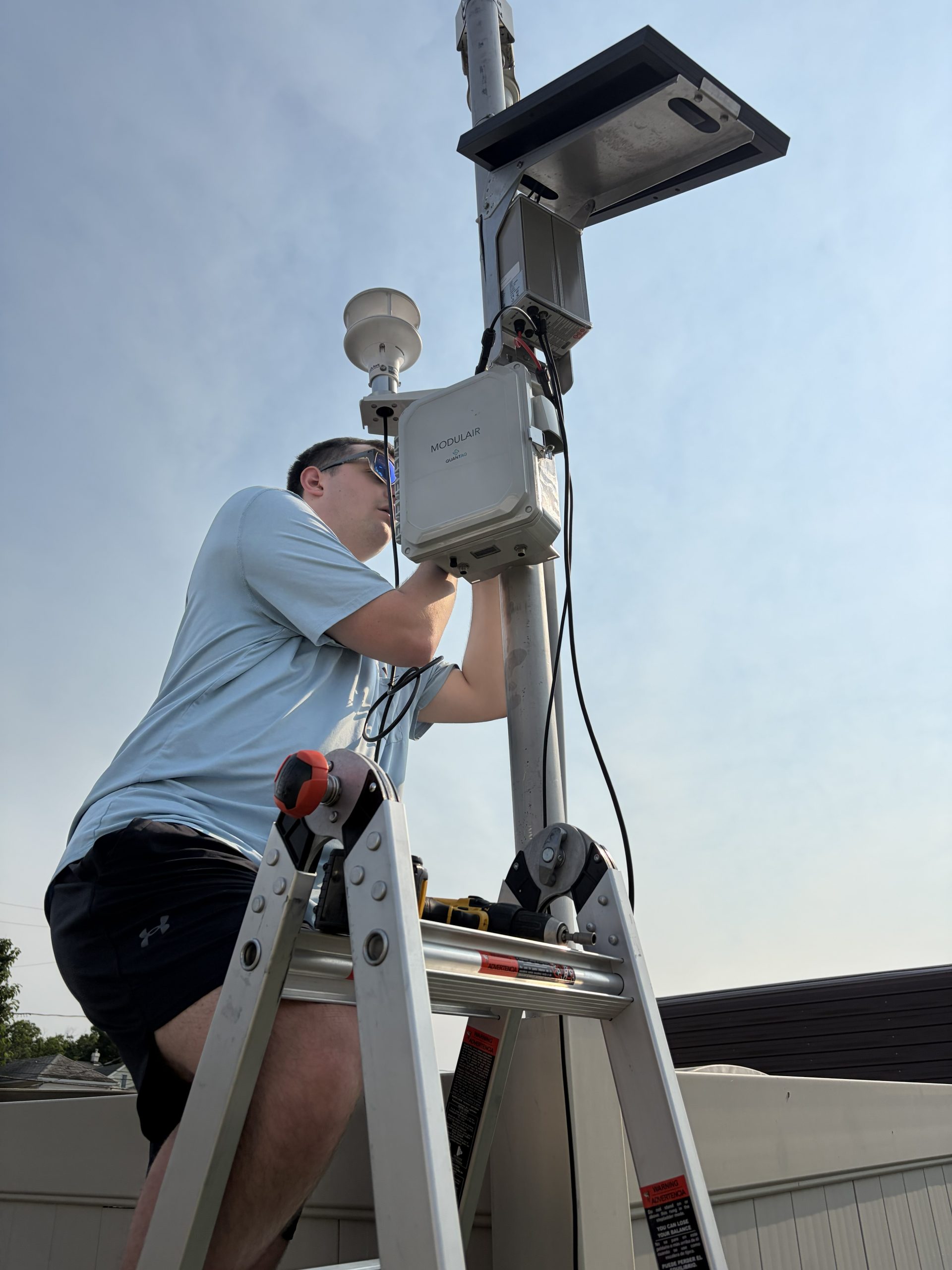
The mining, transportation, and open-air storage of coal can contribute to localized air pollution with pollutants known to negatively impact human health. Additionally, legacy coal landscapes, such as abandoned, unremediated mine lands and culm banks of discarded mining materials may contribute to lofted particulate matter. Much of the Lower Anthracite Coal Region of Pennsylvania has been designated environmental justice areas by the state of Pennsylvania, and yet air quality remains a largely under-emphasized concern. There are no state or federal community-placed air quality sensors in the area, with monitoring only occurring when there is a mine fire despite local residents having concerns and questions about air quality generally.
Student researchers and senior design teams are seeing what it takes to understand environmental issues, communicate data, and produce outcomes in partnership with environmental justice communities.
Given this gap and community-identified need, an interdisciplinary research team bringing together expertise in air chemistry, public health, environmental justice, and data processing are engaging students and community partners in a mixed methods approach to understanding the region’s air quality.
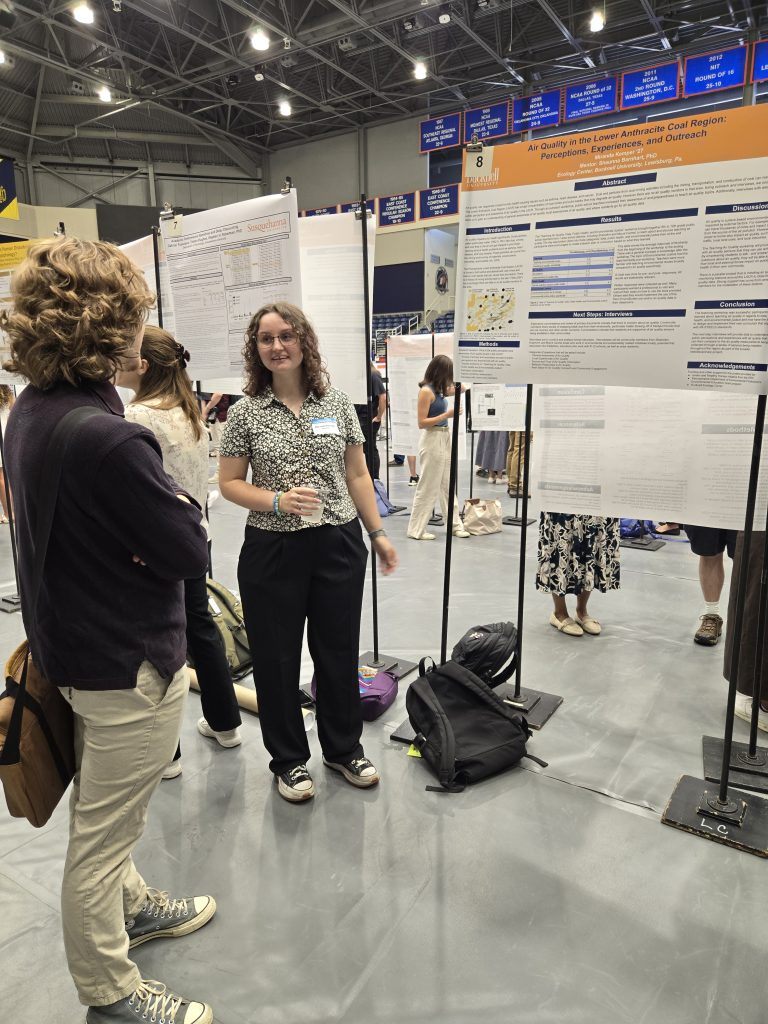
The project partners with local communities to install and operate an air quality sensor network throughout the Lower Anthracite Coal Region to collect real-time data on a range of air quality indicators which are shared through a public dashboard. Interviews and surveys provide insight into the lived experiences and perspectives of residents while community outreach events share air quality data and what it may mean for public health. Data and sensors are available for secondary school teachers through completing a Teaching Air Quality Workshop, bringing air quality science and inquiry into local middle and high schools.
Funding provided by (1) US EPA Region 3 Thriving Communities Grantmaking Program via Green and Healthy Homes Initiative, (2) Pennsylvania Department of Environmental Protection’s Environmental Education Grant Program.