PLACE STUDIES
Imagine ~ Sustain ~ Understand ~ Engage
Where inquiry and creativity converge to explore collaborative visions for thriving communities, understand our environmental history, and foster leadership growth.
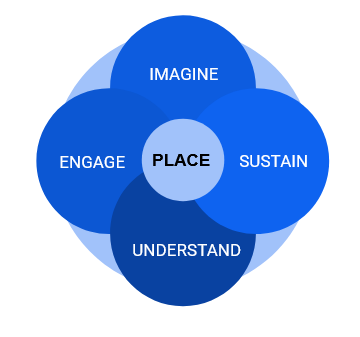
The Place Studies program explores how we imagine, sustain, understand, and engage with place historically, in the present, and in potential futures, and brings this to life through experiential and transformative education and scholarship.
It is, at its core, about creating innovative approaches across all disciplines to understanding human-environment relationships, broadly defined, and over time.
Our Mission
The Place Studies program explores how we imagine, sustain, understand, and engage with place historically, in the present, and in potential futures, and brings this to life through experiential and transformative education and scholarship.
Our Vision
Through place-centered research and learning experiences, the Place Studies program fosters development of future leaders sensitive to the complexities of realizing thriving futures for human and natural communities while generating positive impacts today through collaborations with regional partners.
Our Approach
To advance our Mission, the Place Studies Program:
Collaborates
with external partners to develop unique applied transformative learning and research opportunities for students that advance partner priorities.
Imagines
pathways to thriving futures with faculty, staff, students, and partners.
Explores
the diverse mosaic of historic and present human-environment relationships and experiences that establishes a “place.”
Supports
interdisciplinary teaching, research, and outreach related to revitalization, justice, energy transitions, and environmental policy.
Develops
an ethos of care for human and natural communities.
- Collaborates with external partners to develop unique applied transformative learning and research opportunities for students that advance partner priorities.
- Imagines pathways to thriving futures with faculty, staff, students, and partners.
- Explores the diverse mosaic of historic and present human-environment relationships and experiences that establishes a “place.”
- Supports interdisciplinary teaching, research, and outreach related to revitalization, justice, energy transitions, and environmental policy.
- Develops an ethos of care for human and natural communities
Core Components of the Place Studies Program
1. Teaching
Place Studies brings real-world examples and opportunities to the classroom by supporting faculty across all three colleges in developing unique experiential learning units, situated both on campus and in regional communities.
Students learn about our surrounding communities through facilitated visits and participate in applied class projects with non-profits, local governments, and civic organizations that help foster thriving communities. This includes class collaborations on oral histories, surveys, and policy recommendations alongside our partner organizations. Students are not just learning about what it takes to make communities thrive – they are part of the process.
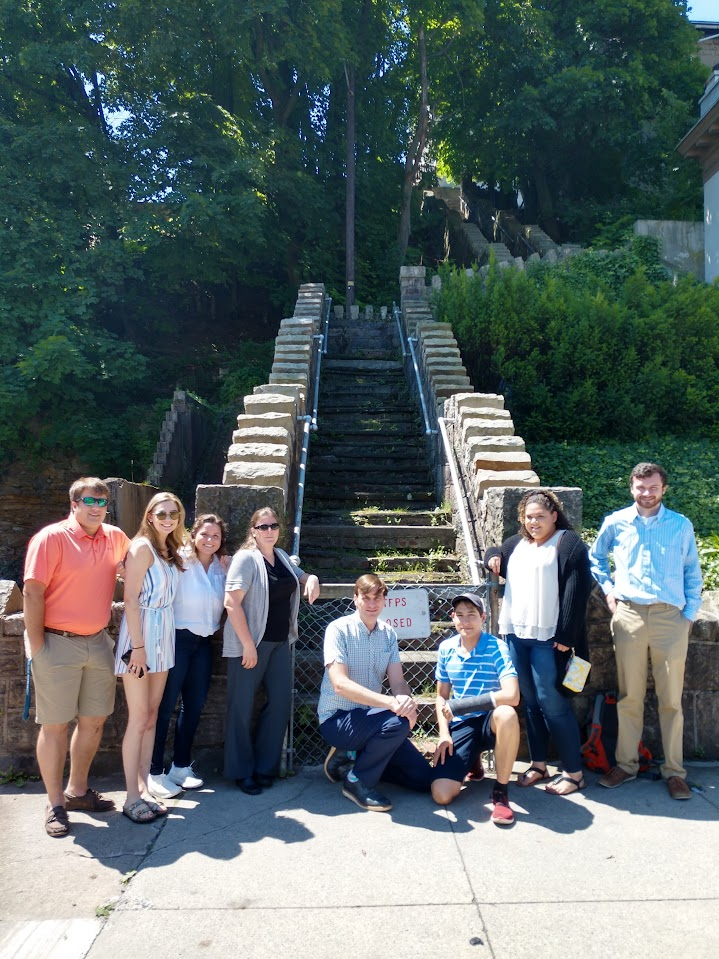
Students in a summer course, Exploring Sustainable Communities, at the 99 Steps in Shamokin, as part of a class project to research and assess 9 sets of public steps are part of a multi-modal transportation project in the City.
1. Teaching
Students learn about our surrounding communities through facilitated visits and participate in applied class projects with non-profits, local governments, and civic organizations that help foster thriving communities. This includes class collaborations on oral histories, surveys, and policy recommendations alongside our partner organizations. Students are not just learning about what it takes to make communities thrive – they are part of the process.
2. Research
Scholars with the Place Studies program engage in long-term in-depth explorations of applied research that align with the program’s themes. They work alongside state agencies to analyze policy, co-lead local efforts for community revitalization and planning, and present their findings to decision makers. They become trusted collaborators with external partners with their demonstration of fresh perspectives, active listening, and critical thinking. Scholar alumni work in urban planning, government policy, environmental law, and more.
Photo above: Place Studies scholar Cristian Cruz, 26’, and Michele Stansberry of Foraging Friends, assess soil quality using an XRF as part of a mixed method study to redevelop a brownfield site as a community asset.
3. Outreach
Outreach is essential to the Place Studies’ community-centric work. Through annual events both on and off campus, such as the annual Sustainability Symposium and community convenings, we connect Bucknell to the region and beyond. The program maintains relationships with over 40 community partners who collaborate with our students and faculty on local priorities. The Coal Region Field Station is one signature initiative that has reached over 700 students, more than 25 community partners, and involved over 25 Bucknell departments and offices since 2015. Student work has been leveraged for over $4 million in direct community funding.
Photo above: Students from Bucknell’s Integrated Perspectives class, Local Climate Action Planning, present posters on Kulpmost survey data at the 2025 Sustainability Symposium.
Photo above: Matt Santa, Americorps VISTA with the Place Studies program, at a Rebuilding Our Community Workshop in Shamokin, with a display of student project deliverables.
4. Service. Connecting across campus and communities through service generates opportunities for students. By serving on local, regional, and national organization boards and committees, the program ensures integration with current issues and priorities. Much of the program’s work furthers capacity building efforts in local communities to realize their own visions for thriving futures. Research results and products are shared with practitioners and decision makers for distribution, implementation, and policy considerations, connecting students’ learning to active service for thriving communities. The program secures grant and gift funding to support faculty, student, and staff research and opportunities.
VISTA with the Place Studies program, at a Rebuilding Our Community Workshop in Shamokin, with a display of student project deliverables.
3. Outreach
Outreach is essential to the Place Studies’ community-centric work. Through annual events both on and off campus, such as the annual Sustainability Symposium and community convenings, we connect Bucknell to the region and beyond. The program maintains relationships with over 40 community partners who collaborate with our students and faculty on local priorities. The Coal Region Field Station is one signature initiative that has reached over 700 students, more than 25 community partners, and involved over 25 Bucknell departments and offices since 2015. Student work has been leveraged for over $4 million in direct community funding.
4. Service. Connecting across campus and communities through service generates opportunities for students. By serving on local, regional, and national organization boards and committees, the program ensures integration with current issues and priorities. Much of the program’s work furthers capacity building efforts in local communities to realize their own visions for thriving futures. Research results and products are shared with practitioners and decision makers for distribution, implementation, and policy considerations, connecting students’ learning to active service for thriving communities. The program secures grant and gift funding to support faculty, student, and staff research and opportunities.